At Innovative Fueling Solutions, safety isn’t an afterthought — it’s built into everything we do. From the moment we design and construct an aviation fuel farm to the ongoing service and support we provide, every system and procedure is created with one goal: to keep fuel clean, secure, and ready for flight.
An aviation fuel farm may look like a quiet row of tanks and pumps, but behind the scenes it’s a highly controlled environment. Here are the key safety aspects that ensure every takeoff begins with confidence.
1. Regulatory Compliance & Engineering Standards
Safety at an aviation fuel farm isn’t just about daily practices — it starts with meeting the highest regulatory and engineering standards. Every facility must follow strict requirements such as FAA Part 139 regulations (Airport Operating Certificates), NFPA 407 (National Fire Protection Association’s Standard for Aircraft Fuel Servicing), and ATA 103 (Standard for Jet Fuel Quality Control at Airports). Coordination with the airport authority for work permits, airside access, and security briefings ensures compliance and smooth operations.
On the design side, fuel systems are engineered to meet NFPA 407, API standards (such as API 650 for tank design and API 2000 for venting), and ATA 103 for fuel quality control. Skids and piping are built with double-wall construction, flame arrestors, grounding and bonding provisions, and pressure relief systems — all of which work together to minimize risks and protect both people and equipment.
2. Protecting Fuel Quality
Aircraft engines are extremely sensitive, which means the fuel must be absolutely clean. At a fuel farm, Jet A and Avgas are filtered and tested multiple times to make sure it’s free of water, dirt, or anything that doesn’t belong. Even the smallest amount of contamination can cause major problems in the air, so quality control is the very first line of defense.
Before a new system goes into service, safety starts with the fuel lines themselves. New piping is flushed with filtered fuel per ATA 103 standards to remove particulates. Hydrant or skid systems are pressure-tested under controlled conditions with ARFF on standby, and fuel is sampled into white buckets to check clarity, color, and particulates before the system is handed over for use.
3. Fire Prevention
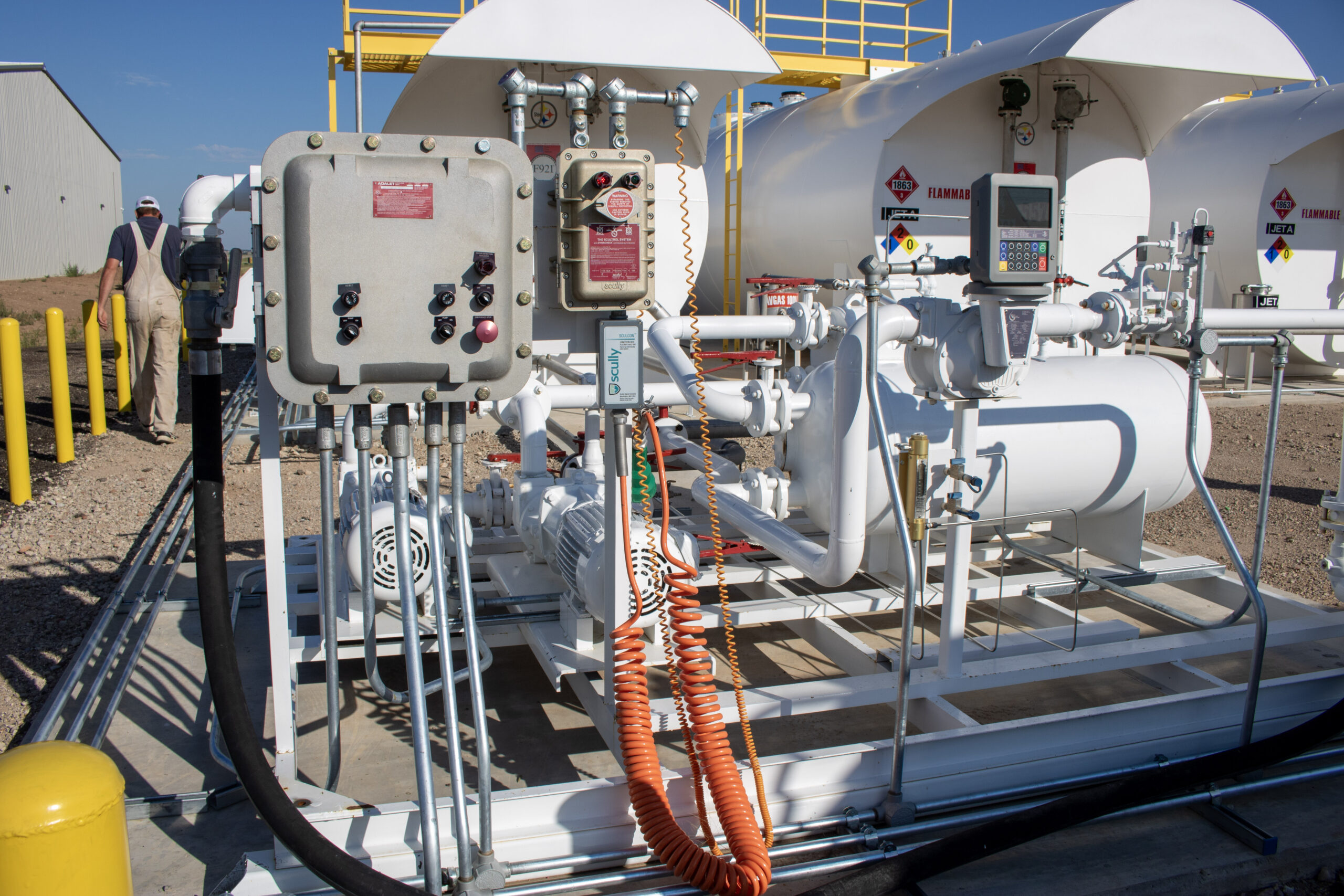
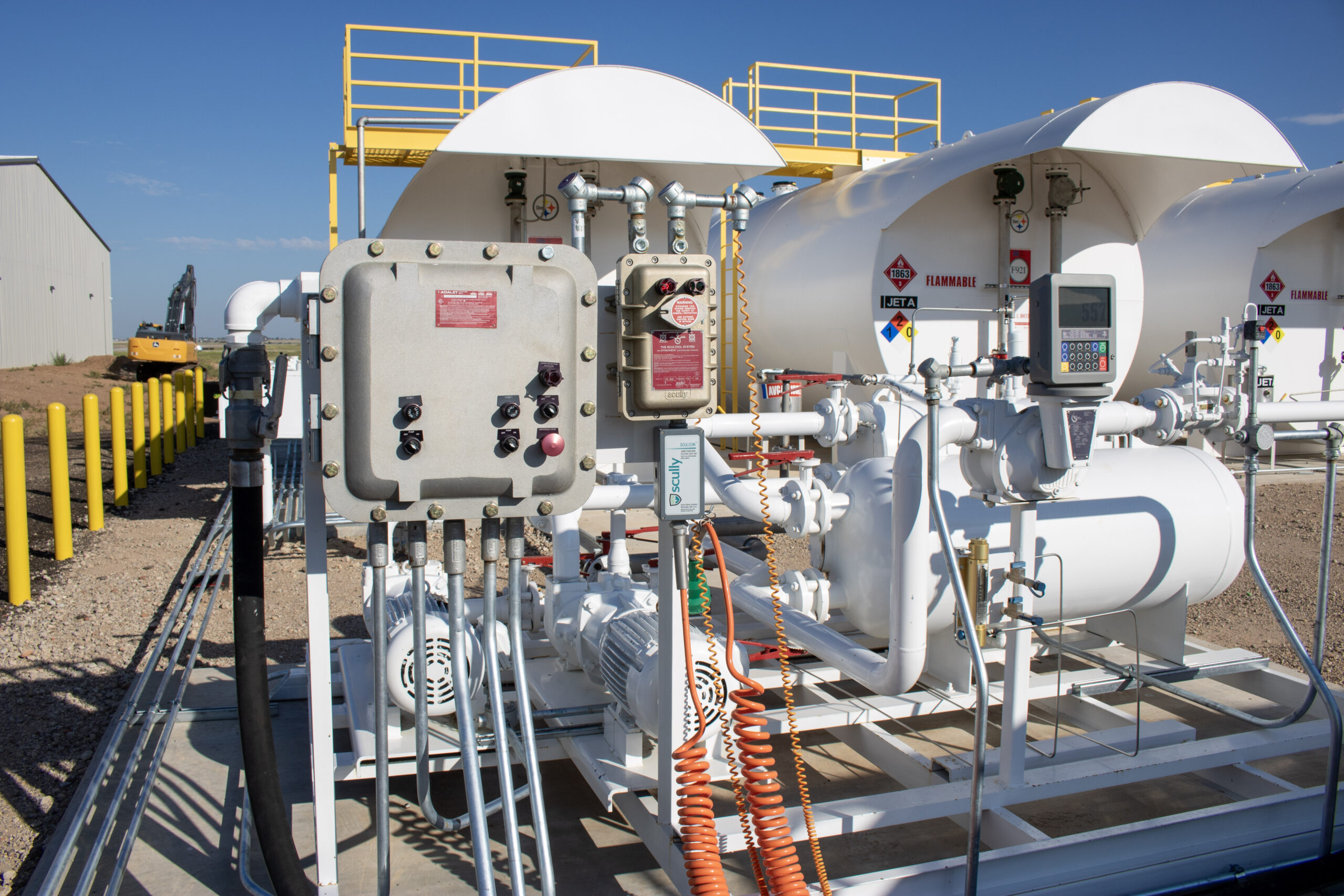
Fuel is flammable by nature, so fire safety is built into every part of a fuel farm. Tanks are spaced apart and surrounded by barriers to prevent a fire from spreading. Special foam or chemical systems stand ready in case of an emergency, and fueling equipment is always grounded to prevent static sparks. Fire extinguishers are within 50 ft which is the required distance per the NFPA 407 which specifies max 50 ft to nearest extinguisher. These precautions work together to keep fuel safe until it reaches the aircraft.
4. Spill Protection
Accidents can happen, which is why aviation fuel farms are designed with backup protection. Tanks sit inside containment walls or double shells to catch leaks, and automatic shut-off systems prevent overfilling. A dead man switch is a safety switch that requires the person fueling to be holding the switch for the fuel to flow, if they were to stop pressing (intentionally or not) the fuel would stop. The dead man switch ensures fuel only flows when someone is actively in control. Spill kits rated for Jet A/Avgas and trained staff are always on hand to respond quickly if fuel ever escapes.
5. Environmental Care
Aviation fuel farms don’t just protect planes — they protect the environment too. Drainage systems and special monitoring equipment ensure fuel never seeps into soil or waterways. By taking care of the ground beneath us, we help keep the skies above us safe as well.
6. Security & Access
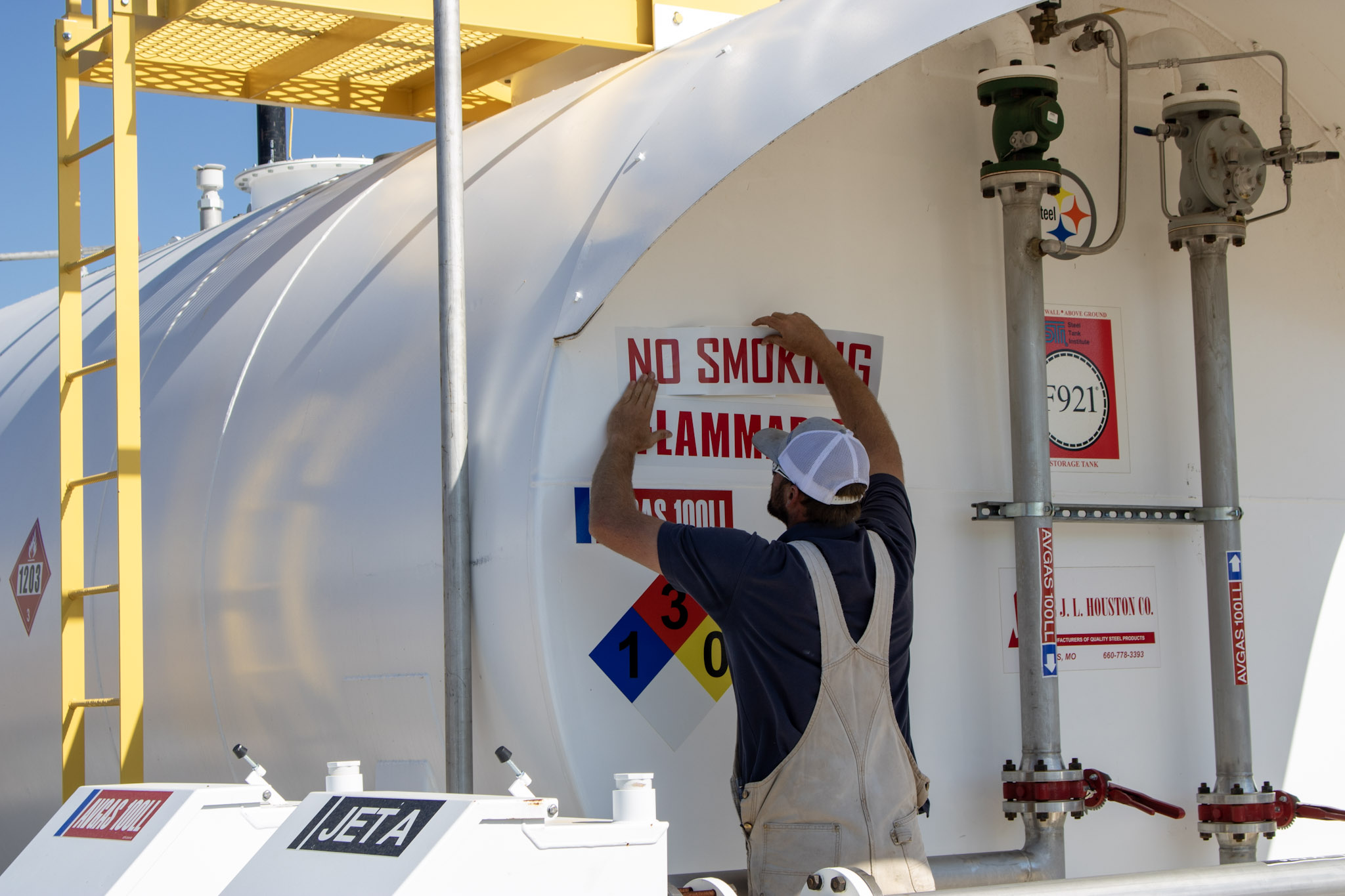
Not just anyone can walk into a fuel farm. Restricted access, fencing, cameras, and clear safety signage keep the area secure. Only trained and authorized personnel are allowed to handle the fuel, reducing the risk of mistakes or tampering.
Safety also extends to how the site is built and maintained. Electrical areas are designated as Class I, Division 1/2, with explosion-proof (ATEX/UL rated) equipment used to prevent ignition hazards. Welding or fabrication work is carefully controlled through hot-work permits and is always kept separate from active fuel handling zones to reduce risk.
7. Trained People, Safe Practices
Even the best systems only work if the people running them are prepared. That’s why training is such a critical part of aviation fueling. There is also Mandatory Personal Protective Equipment which includes flame-resistant clothing (NFPA 2112 compliant), anti-static boots, safety glasses, and gloves rated for petroleum products. Staff are regularly trained and drilled on fuel testing, safe fueling practices, and emergency response. In aviation, there’s no room for “close enough” – everything must be exact.
8. Always Prepared for Emergencies
Fuel farms are designed with worst-case scenarios in mind. Emergency shut-off stations, access for fire trucks, and coordinated response plans with local fire departments ensure that if something goes wrong, the response is quick and effective.
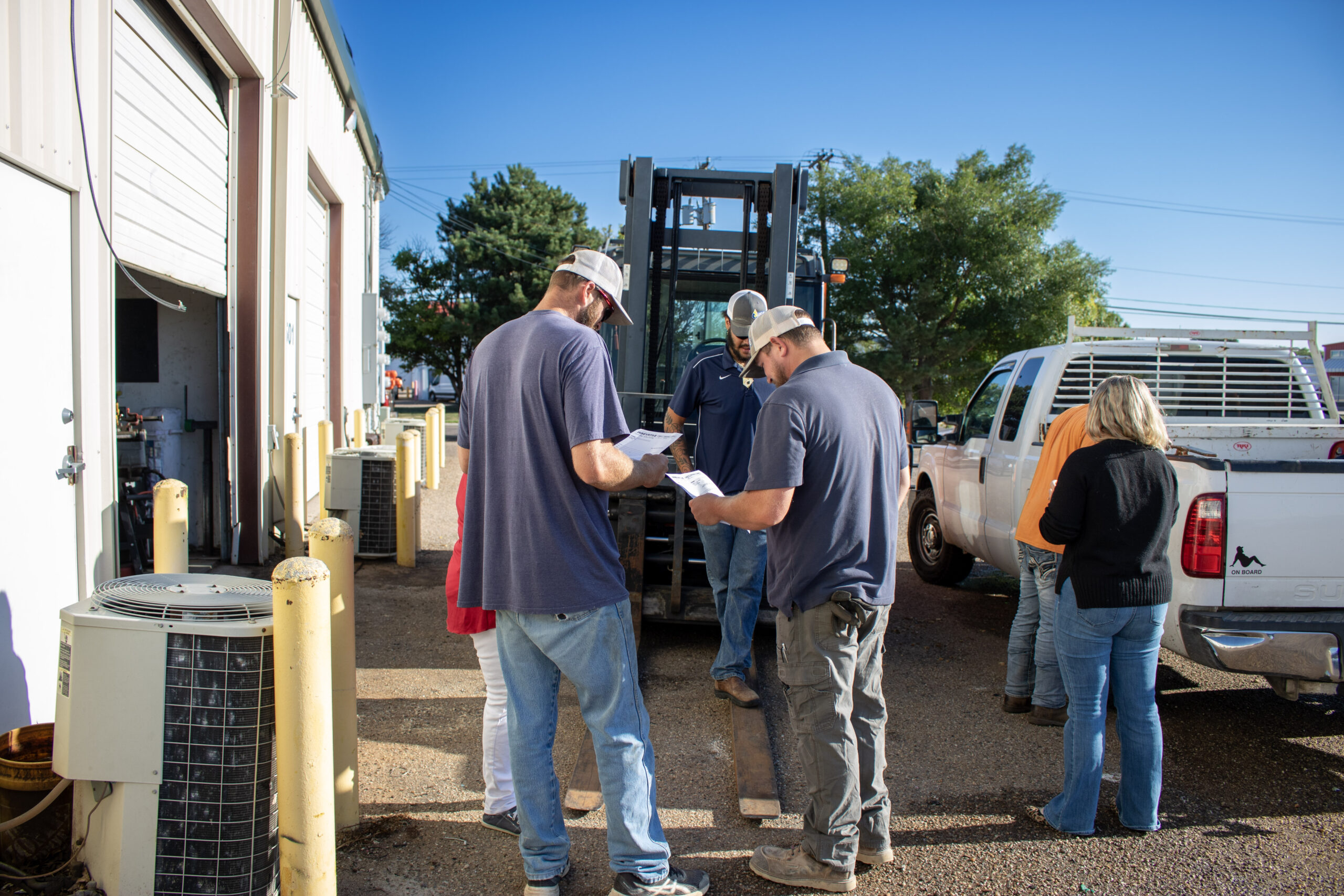
Part of this preparation happens every single day. A Job Safety Analysis (JSA) is established before work begins to identify potential hazards and outline safe steps for each task. This proactive approach helps prevent accidents and ensures everyone on-site is alert, aware, and ready to respond if needed.
A Safer Future for Aviation Fueling
At Innovative Fueling Solutions, we believe every safe takeoff starts on the ground — long before a pilot powers up the engines. By building aviation fuel farms with safety at the center and supporting operators with ongoing maintenance and service, we help ensure that pilots, passengers, and planes can fly with confidence.
When it comes to aviation, there’s no such thing as “good enough” — only safe, reliable, and ready for takeoff. Because every takeoff begins with trust.
References
Air Transport Association of America. (2023). ATA Specification 103: Standard for Jet Fuel Quality Control at Airports (Revision 2023.1). Airlines for America. https://publications.airlines.org/products/spec-103-standard-for-jet-fuel-quality-control-at-airports-revision-2023-1
Federal Aviation Administration. (2021, September 23). Advisory Circular AC 150/5230-4C: Aircraft Fuel Storage, Handling, and Dispensing on Airports. U.S. Department of Transportation. https://www.faa.gov/airports/resources/advisory_circulars/index.cfm/go/document.current/documentnumber/150_5230-4
National Fire Protection Association. (2021). NFPA 407: Standard for Aircraft Fuel Servicing (2022 edition). NFPA.https://www.document-center.com/standards/show/NFPA-407U
.S. Department of the Interior. (2024, September). Aviation Fuel Management Handbook. U.S. Department of the Interior.https://www.doi.gov/sites/default/files/documents/2024-09/doi-aviation-fuel-management-handbook-sept-2024.pdf