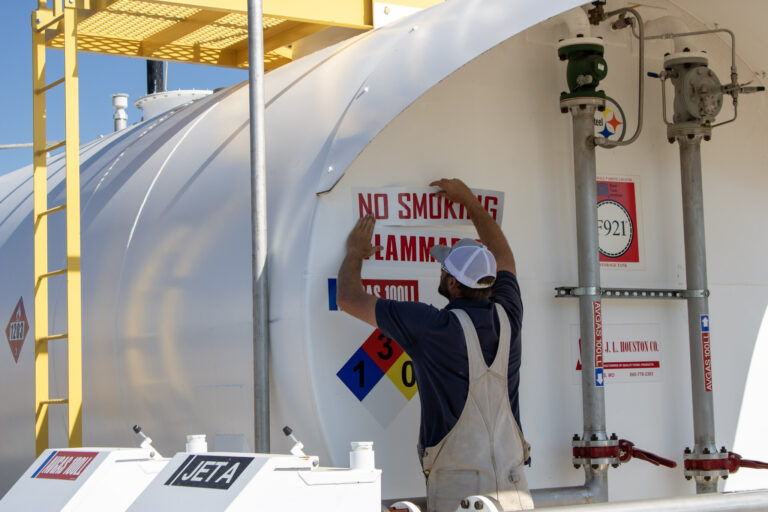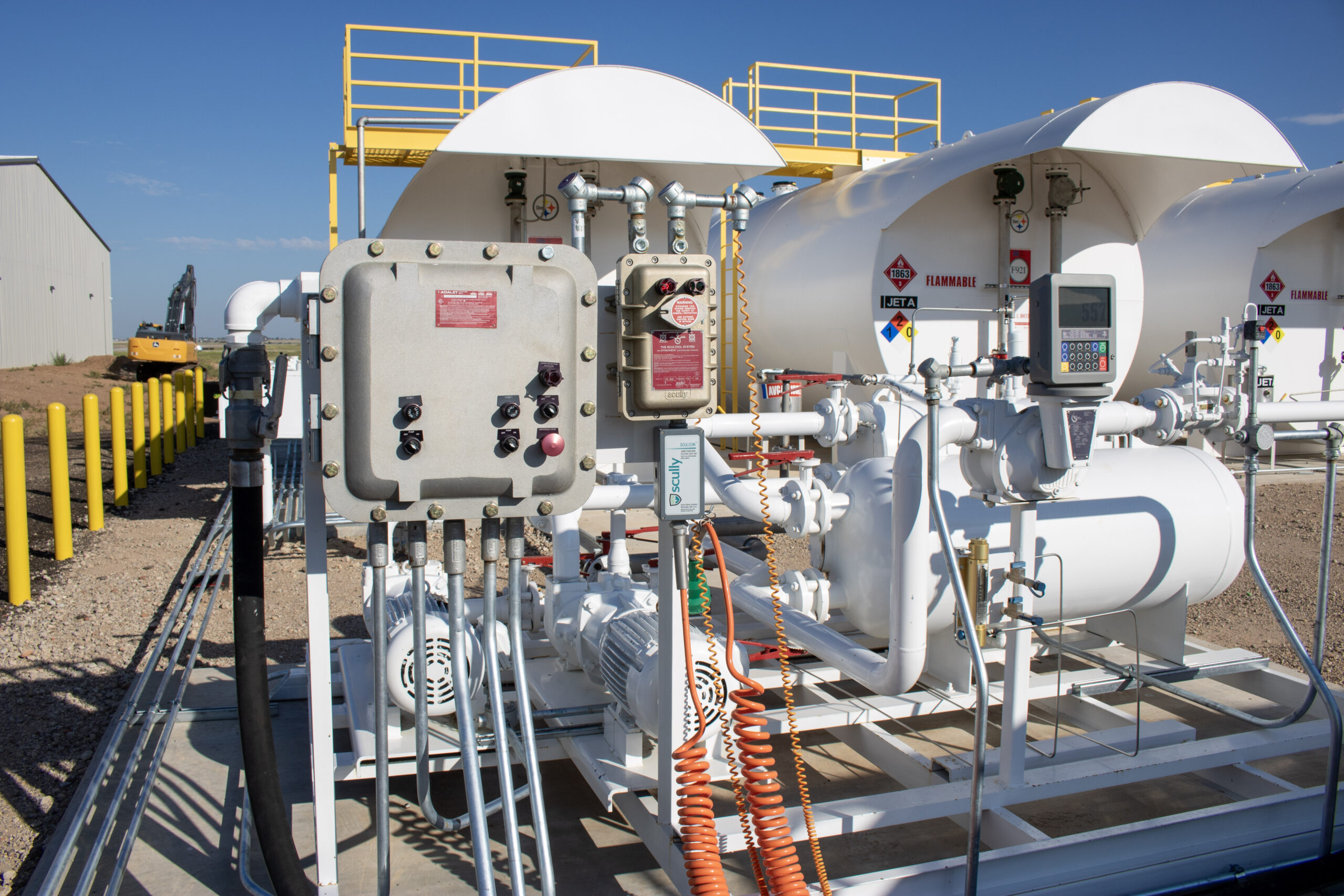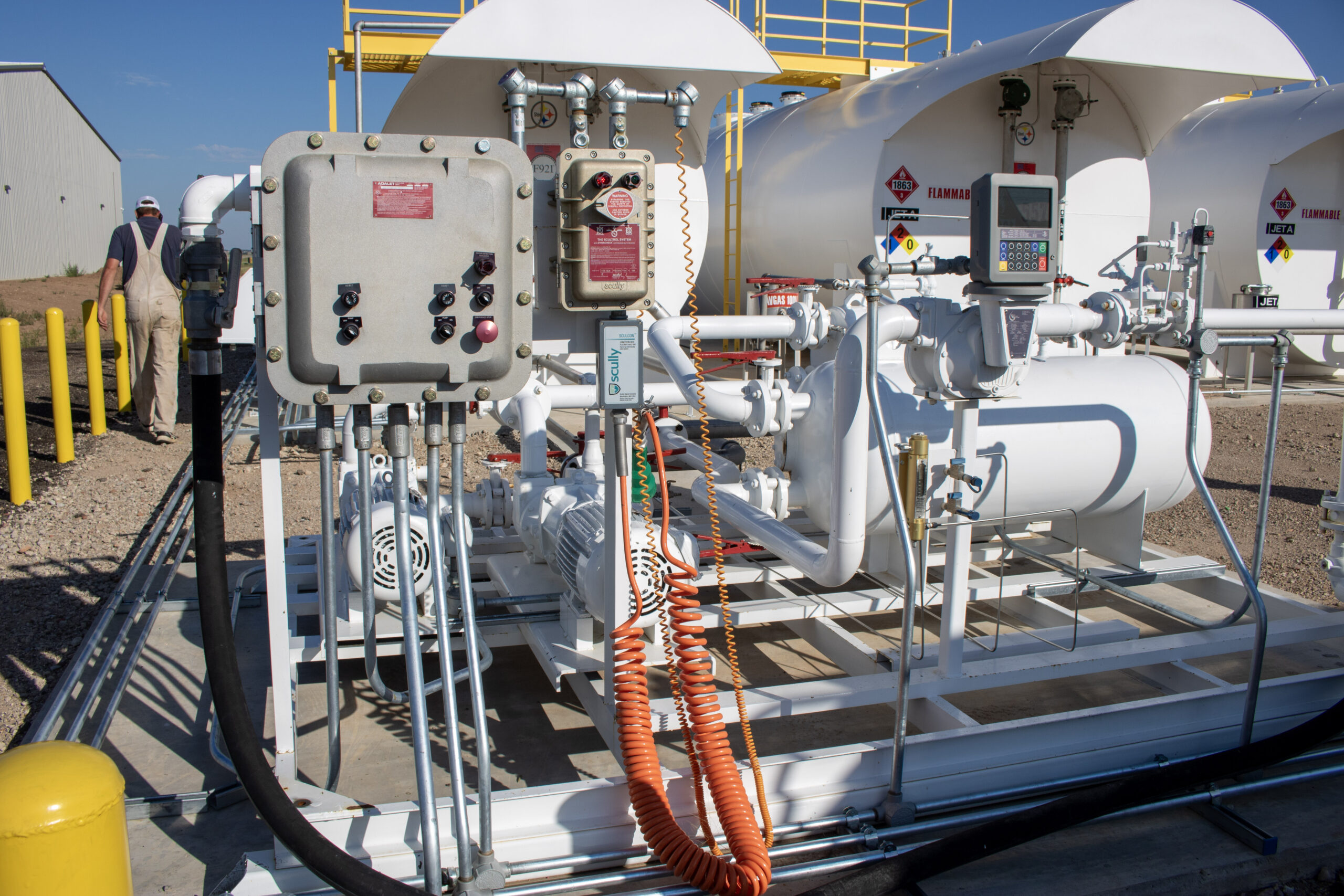
When it comes to powering aircraft, Jet A and Avgas are the two main types of aviation fuel used today and what you will find in our aviation fuel farms. Each is designed for a specific type of engine and aircraft. Jet A, a kerosene-based fuel, is used in turbine engines. Avgas, short for aviation gasoline, is used in piston-engine aircraft. Together, these two fuels keep nearly every type of aircraft in the sky running safely and efficiently.
What is Jet A fuel?
Jet A is a kerosene-based fuel, similar to diesel, that is primarily used in turbine engines, it is the most widely used type of aviation fuel. Some aircraft that Jet A fuels are jets, turboprops, and most commercial aircraft. Jet A is a heavier fuel that burns slowly, it is clear – straw colored.
With a 100℉ flash point (lowest temperature at which it can vaporize enough to ignite when exposed to a spark or flame – or how easily fuel can catch fire) it is less volatile and safer to handle than gasoline. It’s freezing point (temperature at which it begins to form solid crystals or wax particles) is typically around -40℉ which is suitable for most domestic flights.
Jet A fuel has to be filtered twice to keep it as pure as possible. It is filtered once when coming in from a fuel truck and offloaded into the tank on a fuel farm and filtered again when it goes into the refueler or plane. Overall, Jet A’s balance of efficiency, safety, and performance makes it the trusted choice for powering the majority of modern aircraft.
What is Avgas?
Avgas, short for aviation gasoline, is a highly refined fuel primarily used in piston-engine aircraft. It’s most commonly found in smaller general aviation airplanes, flight school trainers, and older aircraft models. Avgas is a lighter fuel that burns more quickly and is typically dyed — with 100LL (low lead) Avgas appearing blue.
With a flash point of around -45℉, Avgas is much more volatile. Its freezing point is generally well below any temperature encountered during flight, so it remains stable even at high altitudes.
Avgas is highly recommended to be filtered twice to maintain purity and prevent contaminants from entering the fuel system. Once when it’s delivered and again before fueling the aircraft. Overall, Avgas’s clean combustion, reliability, and high performance make it the trusted fuel for thousands of piston-engine aircraft flying every day.
Two Different Fuels – Two Different Nozzles: Overwing and Underwing
Aircraft are fueled using two main types of nozzles, depending on the aircraft design and fuel system. Overwing nozzles are used for aircraft that are run on Avgas, smaller piston-engine aircraft. They are similar to the kind you’d see at a car gas pump. The nozzle is inserted directly into the fuel tank opening, typically located on the top of the wing. Overwing nozzles require the line service technician to climb up and manually fuel the plane; it only flows when the technician is squeezing it.
Underwing nozzles, on the other hand, are designed for larger turbine-powered aircraft that use Jet A fuel. Instead of fueling from the top, these nozzles connect to a sealed port beneath the wing for pressurized fueling. This system allows for faster fueling, minimizes the risk of spills, and reduces static electricity hazards. The operator must stand there holding the button down the entire time—if they let go, fuel stops. Underwing fueling is standard at commercial airports and FBOs where efficiency and safety are top priorities.
Jet A vs. Avgas – At A Glance
| Feature | Jet A | Avgas |
| Type of Fuel | Kerosene-based (similar to diesel) | Gasoline-based |
| Used In | Turbine engines (jets, turboprops, most commercial aircraft) | Piston engines (smaller GA planes, trainers) |
| Appearance | Clear to straw-colored | Dyed (commonly blue for 100LL) |
| Flash Point | ~100°F (less volatile, safer to handle) | ~-45°F (highly volatile, ignites easily) |
| Freezing Point | Around -40°F (Jet A) to -47°F (Jet A-1) | Much lower than flight temps — not a concern |
| Burn Rate | Heavier, burns slower | Lighter, burns faster |
| Filtering | Required to be twice filtered (delivery + before fueling aircraft) | Highly recommended to be twice filtered (delivery + before fueling aircraft) |
| Nozzle Used | Underwing Nozzle | Overwing Nozzle |
| Main Role | Powers the majority of modern commercial and business aviation | Powers piston-engine general aviation and training aircraft |
Summary
While Jet A and Avgas are both essential aviation fuels, they are designed for very different purposes. Jet A is the industry standard for turbine engines, offering stability, safety, and efficiency for commercial and business aviation. Avgas, on the other hand, powers piston-engine aircraft with the quick-burning performance needed for smaller planes and training fleets. Both fuels are carefully refined and filtered to ensure purity, but they are not interchangeable. Knowing the difference isn’t just technical knowledge — it’s critical to maintaining safety, reliability, and confidence in every flight.
Whether your operation relies on Jet A, Avgas, or both, choosing the right fueling system is key to keeping every takeoff safe and reliable. At Innovative Fueling Solutions, we design, build, and support aviation fuel farms that are tailored to your exact needs. If you’re building new or upgrading an existing system, our team is here to help you select the right solution and ensure your fueling infrastructure is ready for every flight.
References
AOPA. (2018, January). Jet fuel, from A-1 to T. Aircraft Owners and Pilots Association. https://www.aopa.org/news-and-media/all-news/2018/january/pilot/turbine-jet-fuel
DOI. (2024, September). Aviation Fuel Management Handbook. U.S. Department of the Interior. https://www.doi.gov/sites/default/files/documents/2024-09/doi-aviation-fuel-management-handbook-sept-2024.pdf
Epic Flight Academy. (2025, September 20). Understanding aviation fuel: Types, uses, and safety. Epic Flight Academy. https://epicflightacademy.com/aviation-fuel/
Federal Aviation Administration. (2023). Advisory Circular 150/5230-4C: Aircraft Fuel Storage, Handling, Training, and Dispensing on Airports. U.S. Department of Transportation. https://www.faa.gov/
National Fire Protection Association. (2022). NFPA 407: Standard for Aircraft Fuel Servicing. NFPA. https://www.nfpa.org/
Shell Global. (n.d.). Civil aviation fuel: Jet fuel specifications. Shell. https://www.shell.com/business-customers/aviation/aviation-fuel/civil-jet-fuel-grades.html
Skybrary. (n.d.). Ignition of fuels. SKYbrary. https://skybrary.aero/articles/ignition-fuels
Wikipedia. (n.d.). Avgas. In Wikipedia. https://en.wikipedia.org/wiki/Avgas
Wikipedia. (n.d.). Jet fuel. In Wikipedia. https://en.wikipedia.org/wiki/Jet_fuel